Use one viewpoint and two decisions to identify all four basic handings.
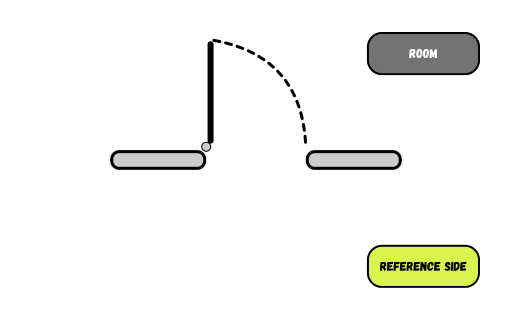
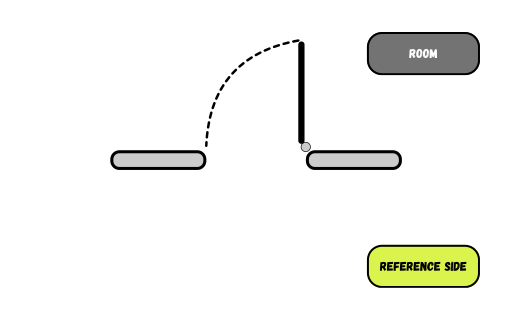
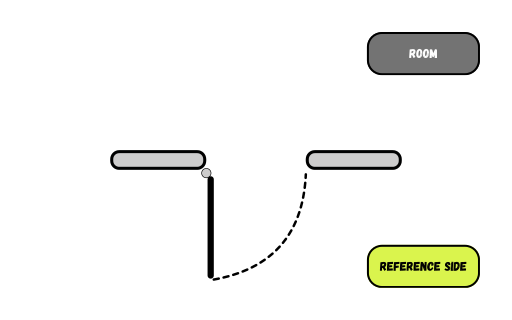
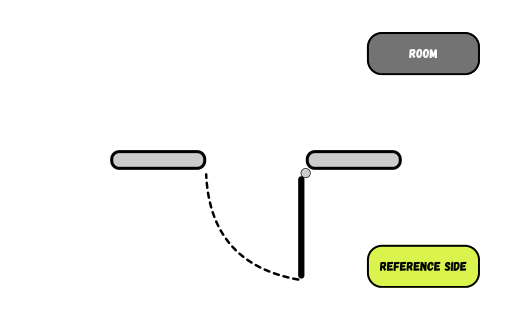
The four cards show the same basic single-door logic from the marked reference side. First decide whether the hinges are on your left or right. Then decide whether the leaf swings away from you or toward you. The first decision establishes LH or RH, and the second determines whether the handing is straight or reverse.
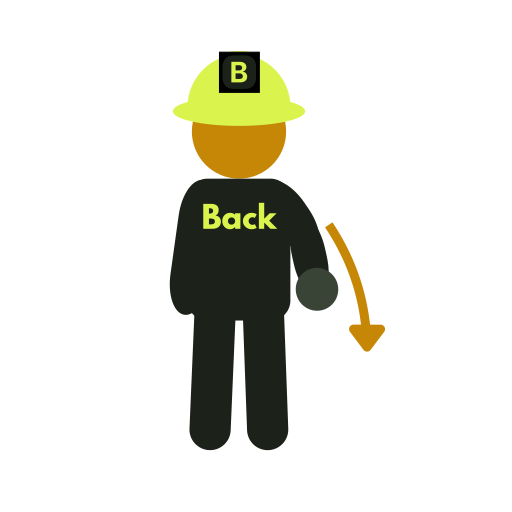
REFERENCE SIDEStand where the drawing tells you to stand
Left and right belong to the person viewing the opening from the selected reference side, not automatically to the page.
HINGE SIDELeft hinges or right hinges
Hinges on the left begin with LH. Hinges on the right begin with RH.
SWINGAway or toward
Away is straight hand. Toward the reference side adds R for reverse.
The four combinations
LH - Left Hand
Hinges left, door swings away.
RH - Right Hand
Hinges right, door swings away.
LHR - Left Hand Reverse
Hinges left, door swings toward you.
RHR - Right Hand Reverse
Hinges right, door swings toward you.
Say the answer in order: hinge side first, reverse second. For example, left hinges plus a swing toward you becomes Left Hand Reverse, or LHR.
THREE-STEP FIELD CHECK
Before writing the hand on a takeoff
Confirm which side is being used as the reference.
Identify the hinge jamb from that viewpoint.
Trace the swing arc and decide whether the leaf moves away or toward the reference side.
Then compare the result with the project door schedule and hardware information before ordering.
Common mistakes
Using corridor side, room side, or the bottom of the page without confirming the reference side.
Calling the lock side the hand.
Reading the open leaf location without tracing the hinge and swing arc.
Applying single-door logic directly to pairs without identifying active and inactive leaves.
Project information still controls
Door schedule and hardware sets.
Manufacturer and supplier handing conventions.
Pairs, double egress, active leaves, and special hardware.
Approved changes, existing conditions, and field verification.
Quick reference: Door and hardware conventions can vary by project, manufacturer, and specification. Verify the project door schedule and manufacturer handing requirements before ordering. Terms & Disclaimer